
Communiqué CRFFN Stakeholder Engagement on National Single Window Implementation
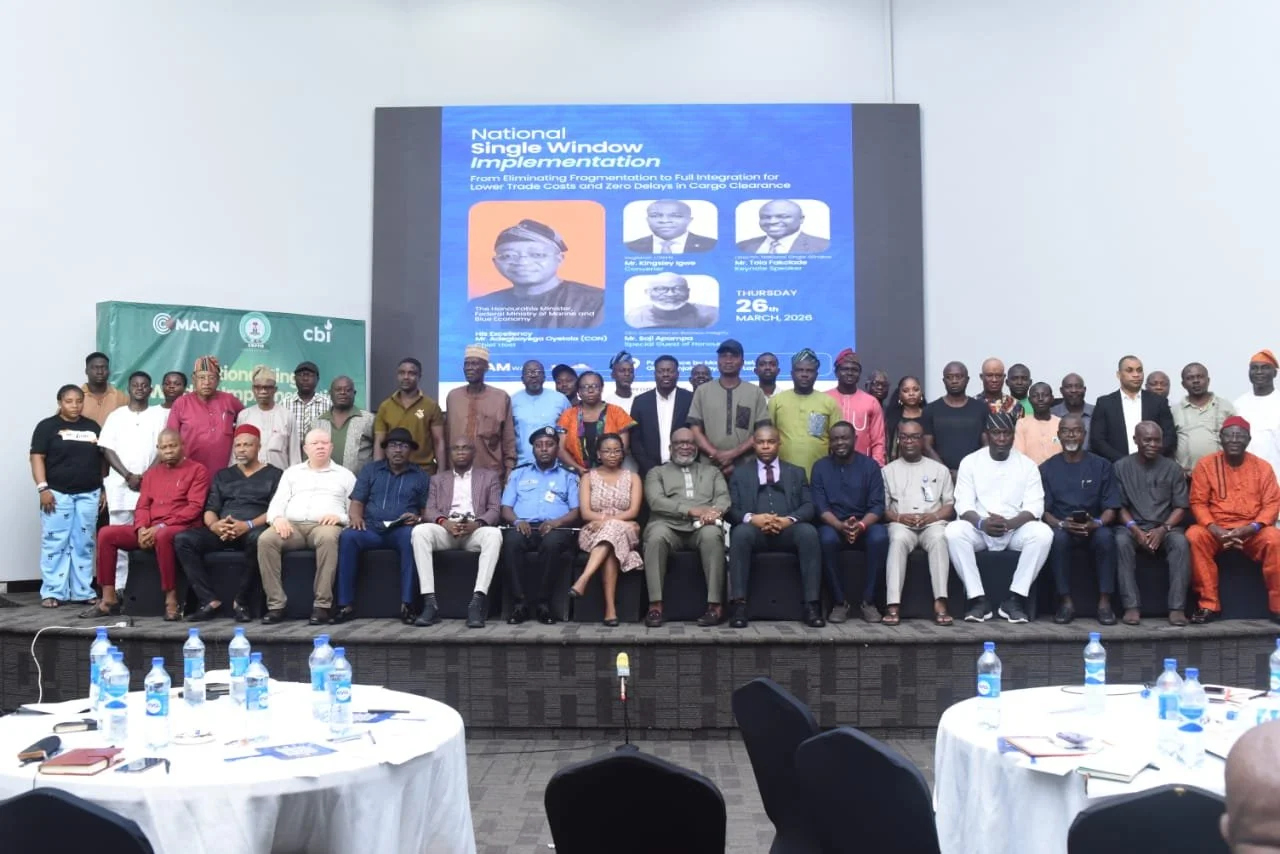
CRFFN Stakeholder Engagement on National Single Window Implementation Providence by Mantis Hotel, Ikeja, Lagos | 26 March 2026
Stakeholders from government, private sector, freight forwarding associations, and development partners convened in Lagos on 26 March 2026 under the leadership of the Council for the Regulation of Freight Forwarding in Nigeria (CRFFN), in collaboration with the Maritime Anti- Corruption Network (MACN) and the Convention on Business Integrity (CBi).
The engagement, held on the eve of the rollout of the National Single Window (NSW), focused on aligning stakeholders on the actions required to ensure its effective implementation and to strengthen cargo clearance and trade facilitation in Nigeria.
Participants recognised the National Single Window (NSW) as a critical reform that will simplify trade processes, improve transparency, and reduce the time and cost of cargo clearance. However, stakeholders emphasised that the NSW, while foundational, is not a standalone solution. Its success depends on strong compliance systems, clear standards, coordinated stakeholder action, and sustained behavioural change across the ecosystem.
The meeting highlighted persistent challenges affecting freight forwarding and cargo clearance, including fragmentation of processes, inconsistent application of rules, high transaction costs, delays, and gaps in professional capacity. Stakeholders noted that these challenges are both systemic and behavioural, requiring coordinated institutional and industry-wide responses.
Participants underscored the importance of collective action between the public sector, private sector, and civil society as the primary driver of sustainable reform. Drawing on lessons from improvements in vessel clearance, stakeholders affirmed that efficiency is achieved when standards are clear, compliance is measurable, professional capacity is strengthened, and discretion is reduced through system design.
Emphasising the need to strengthen professionalism across the industry, including targeted training, stakeholders referenced the importance of improved access to, and understanding of, standard operating procedures (SOPs), and stronger adherence to compliance requirements as key to professionalism. Stakeholders agreed that improving capacity and competence is essential to ensuring consistent and predictable application of processes.
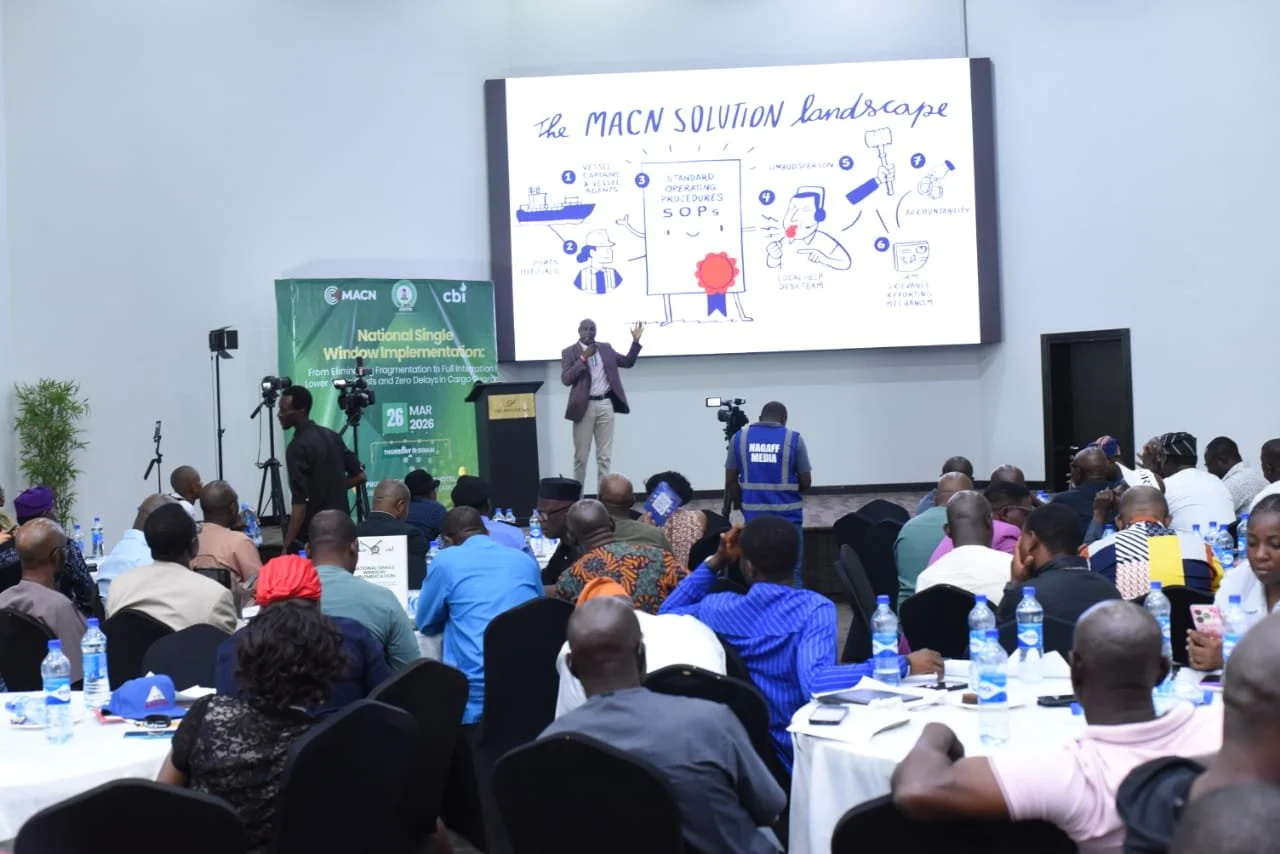
Mr. Moses Fadipe at the CRFFN Stakeholder Engagement on National Single Window Implementation Providence by Mantis Hotel, Ikeja, Lagos | 26 March 2026
A strong consensus emerged on the importance of data-driven reform. Participants agreed that structured reporting and evidence gathering are critical to identifying specific bottlenecks within cargo clearance processes, distinguishing between isolated incidents and systemic failures, and enabling targeted policy and operational interventions. In moving away from anecdotal complaints toward verifiable data, stakeholders noted that accountability across institutions can be significantly strengthened.
It was further emphasised that digital platforms such as the National Single Window provide a critical opportunity to aggregate and analyse operational data across the trade ecosystem. However, their effectiveness depends on the existence of complementary systems that support active compliance monitoring, structured grievance reporting, and continuous feedback loops.
In this regard, stakeholders specifically identified MACN’s grievance reporting/resolution platform – the Port User Experience Diary – as a critical mechanism for capturing real-time operational data, enabling structured grievance reporting, and strengthening evidence-based engagement across the cargo clearance ecosystem.
These mechanisms are essential to ensuring measurable outcomes, strengthening transparency, and enabling the systematic tracking of implementation progress and improvements over time.
Participants highlighted that digitalisation must be accompanied by deliberate behavioural and institutional change. Automation and standardisation were recognised as key tools for reducing discretion and limiting opportunities for inconsistent application of rules. However, stakeholders stressed that these gains can only be sustained where clear and enforceable standards are in place, compliance is actively monitored, and incentives are aligned to promote adherence by both public and private sector actors. Achieving efficiency, therefore, requires not only improved systems, but disciplined compliance with those systems across the entire value chain.
In this regard, the importance of structured grievance reporting and resolution mechanisms was strongly emphasised. Stakeholders agreed that the ability to report operational challenges in real time, escalate issues transparently, track their resolution, and feed lessons back into system improvement is critical to ensuring that reforms deliver tangible results. Such mechanisms will play a central role in strengthening system integrity, improving user experience, and ensuring that the implementation of the National Single Window translates into measurable improvements in trade facilitation on the ground.
As a key outcome of the engagement, participants established an Integrity Alliance Technical Working Group to drive continued collaboration, coordinate reform efforts, and support evidence- based engagement across stakeholders. The Working Group will serve as a platform for sustained dialogue, joint problem-solving, and monitoring of progress in the implementation of agreed actions.
At the conclusion of the engagement, stakeholders resolved to:
Support the implementation and continuous improvement of the National Single Window
Strengthen collaboration across public and private sector actors to address systemic bottlenecks
Promote professionalism, training, and compliance within the freight forwarding industry
Adopt data-driven reporting and compliance monitoring to improve transparency and accountability
Establish an Integrity Alliance Technical Working Group to coordinate reforms and support evidence-based engagement
Strengthen grievance reporting and resolution mechanisms to ensure timely identification and resolution of operational challenges
Participants reaffirmed their collective commitment to working together to build a more efficient, transparent, and globally competitive freight forwarding and logistics ecosystem in Nigeria, in support of national economic growth and trade competitiveness.
About the Convening Organisations
Council for the Regulation of Freight Forwarding in Nigeria (CRFFN)
CRFFN is the statutory regulatory body responsible for regulating and controlling the practice of freight forwarding in Nigeria. It promotes professionalism, sets standards, and ensures compliance within the freight forwarding industry.
Maritime Anti-Corruption Network (MACN)
MACN is a global business network working towards the elimination of corruption in the maritime industry. It operates through collective action, supporting systemic reforms and providing tools that enable transparent reporting and accountability across maritime operations.
Convention on Business Integrity (CBi)
CBi is a leading Nigerian non-governmental organisation committed to promoting transparency, ethics, and good governance in the public, private and civil society sectors. Through research, advocacy, and collective action platforms, CBi works to strengthen institutional integrity and improve the ease of doing business in Nigeria.
Signed by
Mr. Olusoji Apampa
Chief Executive Officer
CBi Nigeria (Representing MACN)
Mr. Kingsley Igwe
Registrar/CEO
Council for the Regulation of Freight Forwarding in Nigeria (CRFFN)